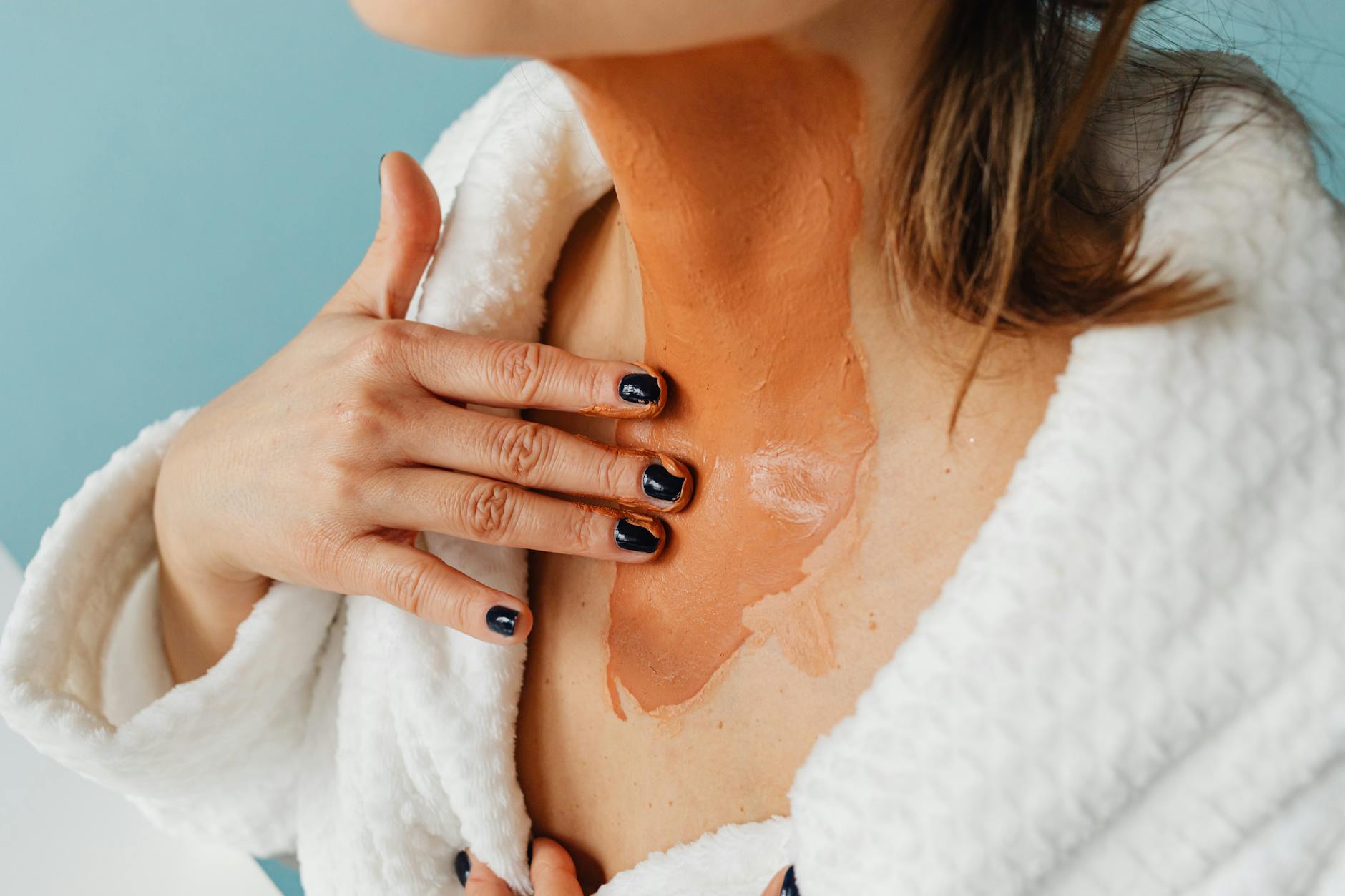
Why Chest and Neck Exfoliation Matters

Your chest area faces unique skincare challenges that many people overlook. This large exposed area experiences constant friction from clothing, significant sun exposure, and oil buildup that leads to stubborn acne and hyperpigmentation. Unlike your face, the chest's skin is thicker and requires different care approaches to prevent permanent scarring and maintain clear skin.
“The chest is particularly prone to acne scarring due to its thickness and tendency toward deep, cystic breakouts.”
Regular exfoliation removes dead skin cells that clog pores and create rough texture. Without proper care, the chest develops blackheads, whiteheads, and inflammatory acne that can persist for months. The décolletage area also shows premature aging from UV damage, making gentle but effective exfoliation essential for both immediate clarity and long-term skin health.
Choosing the Right Exfoliation Method

The chest and neck areas of your Body require different exfoliation approaches than your face. Physical exfoliation using gentle body scrubs with fine particles works well for removing dead skin cells without causing micro-tears that could lead to scarring. Look for scrubs containing sugar or jojoba beads rather than harsh walnut shells.
“Chemical exfoliants penetrate deeper than physical scrubs, making them ideal for treating stubborn chest acne and preventing future breakouts.”
Chemical exfoliation offers deeper treatment through acids like salicylic acid or glycolic acid. These ingredients dissolve the bonds between dead skin cells and unclog pores more effectively than scrubbing alone. For sensitive skin, start with 0.5% salicylic acid twice weekly.
Normal skin tolerates exfoliation 2-3 times weekly, while sensitive skin should limit sessions to once weekly. Oily skin can handle daily chemical exfoliation after a gradual introduction period. Always moisturize immediately after exfoliating to maintain your skin barrier.
Step-by-Step Exfoliation Process
Following proper technique prevents irritation and maximizes results when exfoliating your chest and neck. These delicate areas require careful handling to avoid the permanent scarring that concerns many patients.
Start with lukewarm water and a gentle cleanser to remove surface dirt, oils, and makeup from your chest and neck area.
Use small circular motions with minimal pressure, working from your décolletage upward to your neck for 30-60 seconds maximum.
Remove all product residue with cool water to close pores and prevent irritation.
Apply a fragrance-free body moisturizer while skin remains slightly damp to lock in hydration and restore the skin barrier.
Always exfoliate at night to avoid sun sensitivity. Your skin needs 24-48 hours to recover between sessions, making this a twice-weekly maximum routine for optimal chest and body skin health.
Common Mistakes to Avoid

Avoiding these common errors will prevent permanent scarring and keep your skin healthy. Over-exfoliating your chest and décolletage area ranks as the most frequent mistake. Your chest skin is thinner than facial skin, requiring gentler treatment to prevent irritation and breakouts.
Using harsh scrubs with large granules creates micro-tears that lead to infection and scarring. Choose products with fine particles or chemical exfoliants instead. For example, walnut shell scrubs damage delicate chest skin, while gentle rice powder works safely.
Skipping sunscreen after exfoliation leaves newly exposed skin vulnerable to UV damage. Fresh skin burns faster and develops dark spots easily. Apply SPF 30 or higher immediately after your routine and reapply every two hours outdoors.
Frequency and Maintenance Tips
Most people benefit from exfoliating their chest area 2-3 times per week. Start with twice weekly sessions and adjust based on your skin's response. Your chest requires gentler treatment than other body areas due to its delicate nature and frequent sun exposure.
Begin with gentle exfoliation twice per week for the first month.
Watch for redness, irritation, or increased sensitivity between sessions.
Reduce to once weekly if irritation occurs, increase to three times if skin tolerates well.
Reduce frequency immediately if you notice persistent redness, burning, or increased breakouts. These warning signs indicate over-exfoliation, which can worsen existing skin issues rather than improve them.
Integrate chest exfoliation into your broader body care routine by following with moisturizer and daily sunscreen. Coordinate timing with your face routine to maintain consistency without overwhelming your skin's natural barrier function.
Start with twice-weekly chest exfoliation and adjust frequency based on your skin's tolerance to prevent irritation while achieving clear results.
Frequently Asked Questions
Why should I exfoliate my chest and neck area?
The chest area experiences constant friction from clothing, significant sun exposure, and oil buildup that leads to stubborn acne and hyperpigmentation. Regular exfoliation removes dead skin cells that clog pores and create rough texture, preventing blackheads, whiteheads, and inflammatory acne. The décolletage area also shows premature aging from UV damage, making gentle but effective exfoliation essential for both immediate clarity and long-term skin health.
What's the difference between physical and chemical exfoliation for chest acne?
Physical exfoliation uses gentle body scrubs with fine particles like sugar or jojoba beads to remove dead skin cells without causing micro-tears. Chemical exfoliation offers deeper treatment through acids like salicylic acid or glycolic acid that dissolve the bonds between dead skin cells and unclog pores more effectively than scrubbing alone. Chemical exfoliants penetrate deeper than physical scrubs, making them ideal for treating stubborn chest acne and preventing future breakouts.
How often should I exfoliate my chest and neck?
Normal skin tolerates exfoliation 2-3 times weekly, while sensitive skin should limit sessions to once weekly. Oily skin can handle daily chemical exfoliation after a gradual introduction period. Your skin needs 24-48 hours to recover between sessions, making this a twice-weekly maximum routine for optimal results.
What's the correct way to exfoliate my chest area?
Start with lukewarm water and a gentle cleanser, then apply exfoliant using small circular motions with minimal pressure, working from your décolletage upward to your neck for 30-60 seconds maximum. Rinse thoroughly with cool water to remove all product residue and prevent irritation. Always moisturize immediately with a fragrance-free body moisturizer while skin remains slightly damp to lock in hydration and restore the skin barrier.
When should I exfoliate my chest to avoid skin damage?
Always exfoliate at night to avoid sun sensitivity, as your skin becomes more vulnerable to UV damage after exfoliation. Over-exfoliating ranks as the most frequent mistake since chest skin is actually thinner than facial skin and requires gentler treatment. Your skin needs proper recovery time between sessions to prevent permanent scarring and maintain healthy skin.
Disclaimer: This content is for informational purposes only and does not constitute medical advice. Always consult a qualified healthcare provider before making health decisions.