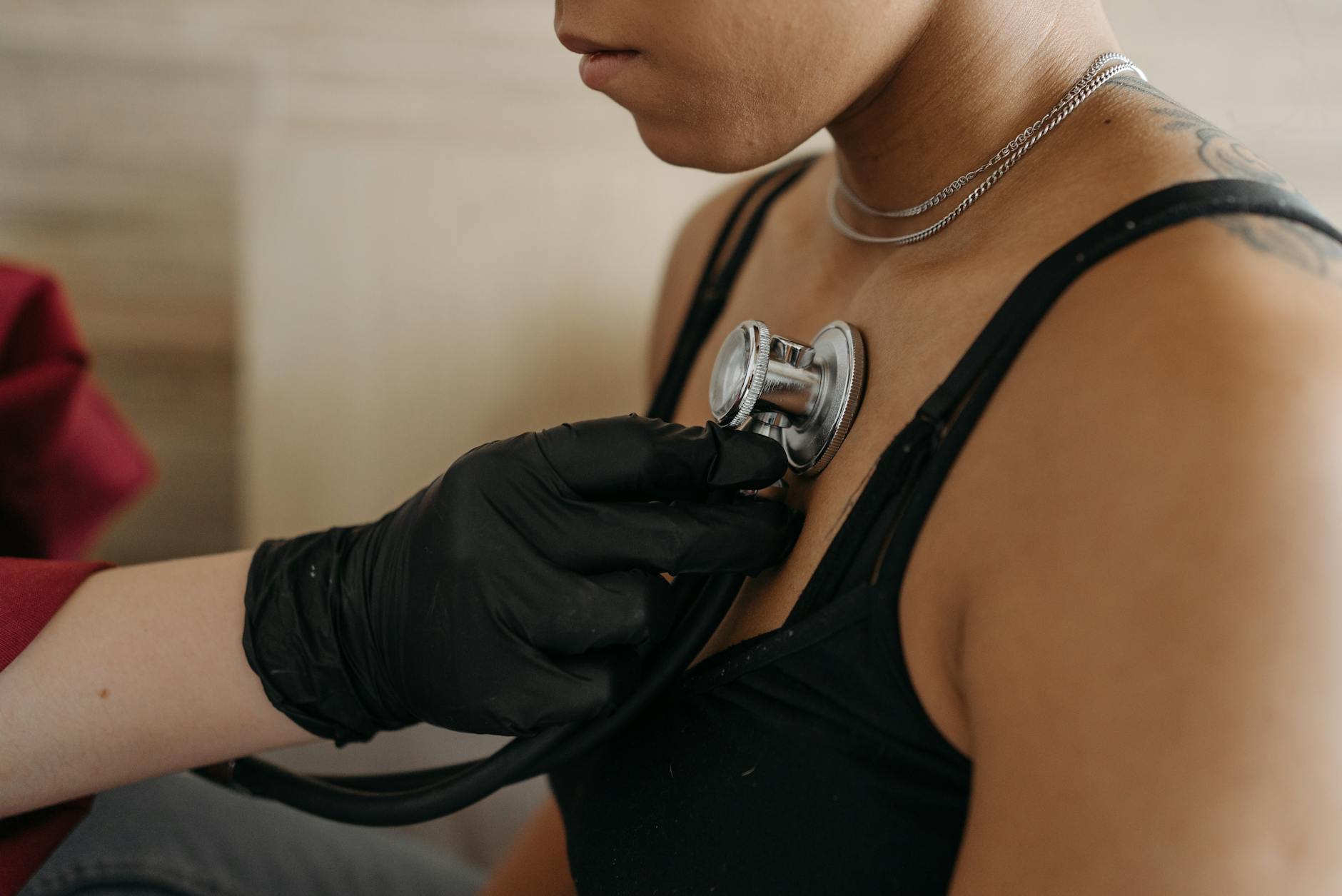
What Are Dark Spots on Your Chest?

Dark spots on your chest and décolletage appear as patches of discolored skin that range from light brown to deep black. This large exposed area is particularly prone to hyperpigmentation, sun damage, and acne scarring due to frequent UV exposure and hormonal fluctuations.
“Dark spots on the chest often develop gradually, making early identification crucial for effective treatment.”
Common types include post-inflammatory hyperpigmentation from acne breakouts, age spots from sun exposure, and melasma triggered by hormonal changes. Unlike temporary redness that fades within days, these spots persist for weeks or months without treatment. They differ from moles by their flat appearance and even coloration.
For example, a small brown patch that appeared after a chest breakout represents post-acne hyperpigmentation, while larger, irregular spots across the décolletage typically indicate sun damage. The good news? Most dark spots respond well to proper treatment and aren't permanent scarring.
Common Causes of Chest Dark Spots

Understanding what causes dark spots on your chest helps prevent future occurrences and reduces concerns about permanent scarring. The chest area is particularly vulnerable to discoloration due to its exposure to various triggers.
"Sun damage remains the leading cause of chest hyperpigmentation, making daily SPF protection essential for prevention."
Sun damage and UV exposure top the list of culprits. The chest receives direct sunlight exposure, especially during summer months or low-cut clothing wear. This UV damage triggers melanin overproduction, creating those stubborn brown patches.
Post-inflammatory hyperpigmentation develops after acne breakouts, cuts, or skin irritation heal. The inflammatory response leaves behind excess pigment that can persist for months without proper treatment.
Hormonal changes during pregnancy, menopause, or from birth control pills can trigger melasma-like darkening. These hormonal fluctuations increase melanin sensitivity throughout the décolletage area.
Age spots naturally develop as skin matures, typically appearing after age 40 when cellular renewal slows down significantly.
How to Treat Dark Spots on Chest and Décolletage
Treating dark spots on your chest and décolletage requires patience and the right approach. Start with gentle exfoliation using a washcloth or body scrub with salicylic acid twice weekly. This removes dead skin cells that make spots appear darker without causing irritation to this sensitive area.
Use a mild body scrub or chemical exfoliant containing salicylic acid twice weekly to remove dead skin cells.
Look for body lotions containing vitamin C, niacinamide, or kojic acid to fade existing spots gradually.
Apply broad-spectrum SPF 30 sunscreen to prevent new spots from forming and existing ones from darkening.
Look for body products containing proven brightening ingredients like vitamin C, niacinamide, or kojic acid. These work gradually to fade spots without harsh bleaching effects. For stubborn spots, dermatologists offer professional treatments including chemical peels and laser therapy.
Results typically appear after 4-6 weeks of consistent treatment. While permanent scarring is rare with proper care, protecting your chest from future sun damage prevents new dark spots from developing.
Prevention Tips for Future Dark Spots

Preventing new dark spots on your chest requires consistent daily habits that protect and nourish your skin. The chest area is particularly vulnerable to sun damage due to its large surface area and frequent exposure during warmer months.
Use SPF 30 or higher on your chest every morning, even when wearing clothing that might shift throughout the day.
Remove makeup, sunscreen, and daily buildup with a mild cleanser to prevent pore blockage that can lead to post-inflammatory hyperpigmentation.
Apply a lightweight, non-comedogenic moisturizer to maintain your skin barrier and support healthy cell turnover.
These simple steps help prevent the scarring and discoloration that many people fear, keeping your skin clear and even-toned long-term.
When to See a Dermatologist
Seek professional help if your dark spots change size, color, or texture, or if they feel raised or itchy. These warning signs could indicate something more serious than typical hyperpigmentation.
A dermatologist can properly diagnose your specific type of discoloration and recommend targeted treatments that work faster than over-the-counter options. Professional assessment prevents wasted time on ineffective products and reduces your risk of permanent scarring from improper treatment.
During your consultation, expect a thorough skin examination and discussion of your medical history. Your dermatologist may recommend prescription treatments, chemical peels, or laser therapy for stubborn spots.
Professional evaluation ensures you get the right treatment for your specific dark spots while avoiding potential complications from self-treatment.
Frequently Asked Questions
What are dark spots on the chest?
Dark spots on your chest and décolletage appear as patches of discolored skin that range from light brown to deep black. This large exposed area is particularly prone to hyperpigmentation, sun damage, and acne scarring due to frequent UV exposure and hormonal fluctuations. Common types include post-inflammatory hyperpigmentation from acne breakouts, age spots from sun exposure, and melasma triggered by hormonal changes.
What causes dark spots on the chest?
Sun damage and UV exposure are the leading causes of chest hyperpigmentation, as the chest receives direct sunlight exposure. Post-inflammatory hyperpigmentation can develop after acne breakouts, cuts, or skin irritation heal. Hormonal changes during pregnancy, menopause, or from birth control pills can trigger melasma-like darkening, while age spots naturally develop as skin matures, typically appearing after age 40.
How do you treat dark spots on the chest?
Start with gentle exfoliation using a washcloth or body scrub with salicylic acid twice weekly to remove dead skin cells. Look for body products containing proven brightening ingredients like vitamin C, niacinamide, or kojic acid that work gradually to fade spots. Apply broad-spectrum SPF 30 sunscreen daily to prevent new spots from forming and existing ones from darkening.
How long does it take for chest dark spots to fade?
Results typically appear after 4-6 weeks of consistent treatment with the right approach. Unlike temporary redness that fades within days, dark spots persist for weeks or months without treatment. The good news is that most dark spots respond well to proper treatment and aren't permanent scarring.
Disclaimer: This content is for informational purposes only and does not constitute medical advice. Always consult a qualified healthcare provider before making health decisions.