Quick Verdict: Atopic Dermatitis vs Seborrheic Dermatitis
These two common skin conditions often get confused, but knowing the key differences helps you get the right treatment faster. While both cause red, flaky skin that can feel embarrassing in social situations, they have distinct patterns that make identification straightforward.
“Location tells the story—atopic dermatitis loves elbow and knee creases, while seborrheic dermatitis targets oily areas like your scalp and face.”
Atopic dermatitis typically starts in childhood and appears in body creases like elbow bends, behind knees, and on wrists. The skin looks dry, thick, and intensely itchy with a rough texture. Seborrheic dermatitis usually begins in adulthood and shows up where oil glands are most active—scalp, eyebrows, nose sides, and chest center.
The good news about scarring concerns: neither condition typically causes permanent marks when treated properly. Atopic dermatitis responds well to moisturizers and prescription anti-inflammatories, while seborrheic dermatitis clears with antifungal treatments and gentle exfoliation. Treatment response differs significantly—atopic dermatitis needs constant moisture barrier repair, while seborrheic dermatitis requires oil control and yeast management.
What is Atopic Dermatitis?
Atopic dermatitis, also known as eczema or atopic eczema, is a chronic inflammatory skin condition that causes intense itching, dry scaly skin, and red inflamed patches. This condition typically appears during childhood and affects millions of people worldwide, making it one of the most common skin disorders.
The condition stems from genetic predisposition combined with skin barrier dysfunction and immune system overactivity. Environmental triggers like allergens, stress, and irritants can worsen symptoms. Unlike some skin conditions that resolve quickly, atopic dermatitis requires ongoing management to prevent flare-ups.
“Atopic dermatitis affects 15-20% of children and 1-3% of adults worldwide, making proper identification and treatment essential.”
The condition commonly appears on specific body sites including the face, neck, inner elbows, behind knees, hands, feet, wrists, and ankles. Symptoms range from mild dryness to severe inflammation with oozing or crusting lesions. Skin thickening can develop in areas of chronic scratching.
While concerns about permanent scarring are understandable, proper treatment can prevent lasting damage. Treatment options include topical corticosteroids, moisturizers, calcineurin inhibitors, antihistamines, phototherapy, and systemic immunosuppressants for severe cases. Risk factors include family history of allergies or asthma, genetic mutations, and exposure to environmental allergens.
What is Seborrheic Dermatitis?
Seborrheic dermatitis is a chronic inflammatory skin condition that primarily affects areas rich in oil-producing glands. Unlike atopic dermatitis, which can appear anywhere on the body, seborrheic dermatitis targets specific zones where your skin naturally produces more sebum.
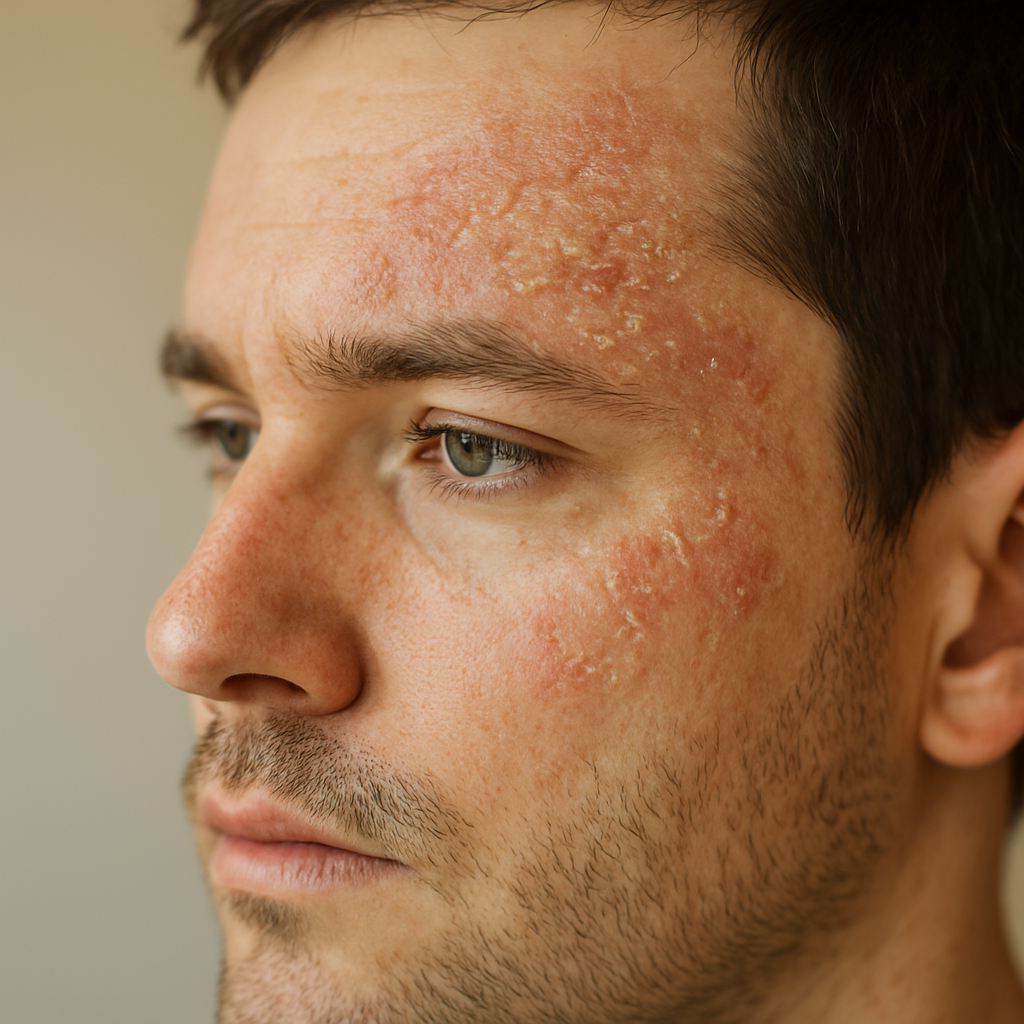
The scalp, face (especially around the nose, eyebrows, and ears), chest, and upper back are the most common locations. This condition creates distinctive greasy, yellowish scales that differ markedly from the dry, rough patches seen in atopic dermatitis. The scales often have an oily texture and may appear slightly yellow or white.
A key factor in seborrheic dermatitis involves Malassezia yeast, which naturally lives on everyone's skin but overgrows in certain people. This yeast feeds on the oils in your skin, triggering inflammation and the characteristic flaking. While this might sound concerning, seborrheic dermatitis rarely causes permanent scarring when properly managed.
The condition follows different age patterns than atopic dermatitis. You'll see peaks in infancy (cradle cap), adolescence through young adulthood, and again after age 50. For example, many teenagers develop seborrheic dermatitis around their hairline and eyebrows during puberty when oil production increases.
The good news is that with proper treatment, most people see significant improvement within weeks, helping you achieve the clear skin you're seeking without lasting damage.
Key Differences: Side-by-Side Comparison
Understanding the distinct characteristics of atopic dermatitis and seborrheic dermatitis helps you identify which condition affects your skin. While both cause redness and scaling, their patterns reveal important differences that guide treatment decisions.
Age of onset marks the first major difference. Atopic dermatitis typically appears in infancy or early childhood, with 60% of cases developing before age one. Seborrheic dermatitis shows a bimodal pattern, affecting infants in their first few months and adults between ages 30-60. This timing difference often provides the first clue for diagnosis.
Body location patterns create clear distinctions. Atopic dermatitis favors flexural areas like elbow creases, behind knees, and wrists. It often spreads symmetrically across the body. Seborrheic dermatitis targets oil-rich zones including the scalp, eyebrows, nasolabial folds, and central chest, following sebaceous gland distribution.
Scale appearance differs markedly between conditions. Atopic dermatitis produces fine, dry scales with intense itching that can lead to lichenification from chronic scratching. Seborrheic dermatitis creates greasy, yellow scales that flake easily, accompanied by mild to moderate itching.
Associated conditions separate these dermatoses further. Atopic dermatitis frequently occurs alongside asthma, allergic rhinitis, and food allergies as part of the atopic triad. Seborrheic dermatitis associates with Parkinson's disease, HIV, and stress-related flares but lacks the allergic component.
Treatment responsiveness varies significantly. Atopic dermatitis requires comprehensive management including moisturizers, topical steroids, and allergen avoidance. Seborrheic dermatitis responds well to antifungal treatments and keratolytic agents, reflecting its connection to Malassezia yeast overgrowth.
Symptoms: How to Tell Them Apart
Understanding the specific symptoms of each condition helps you identify which type of dermatitis you're dealing with. While both conditions cause skin irritation, their symptom patterns differ significantly in intensity, appearance, and feel.
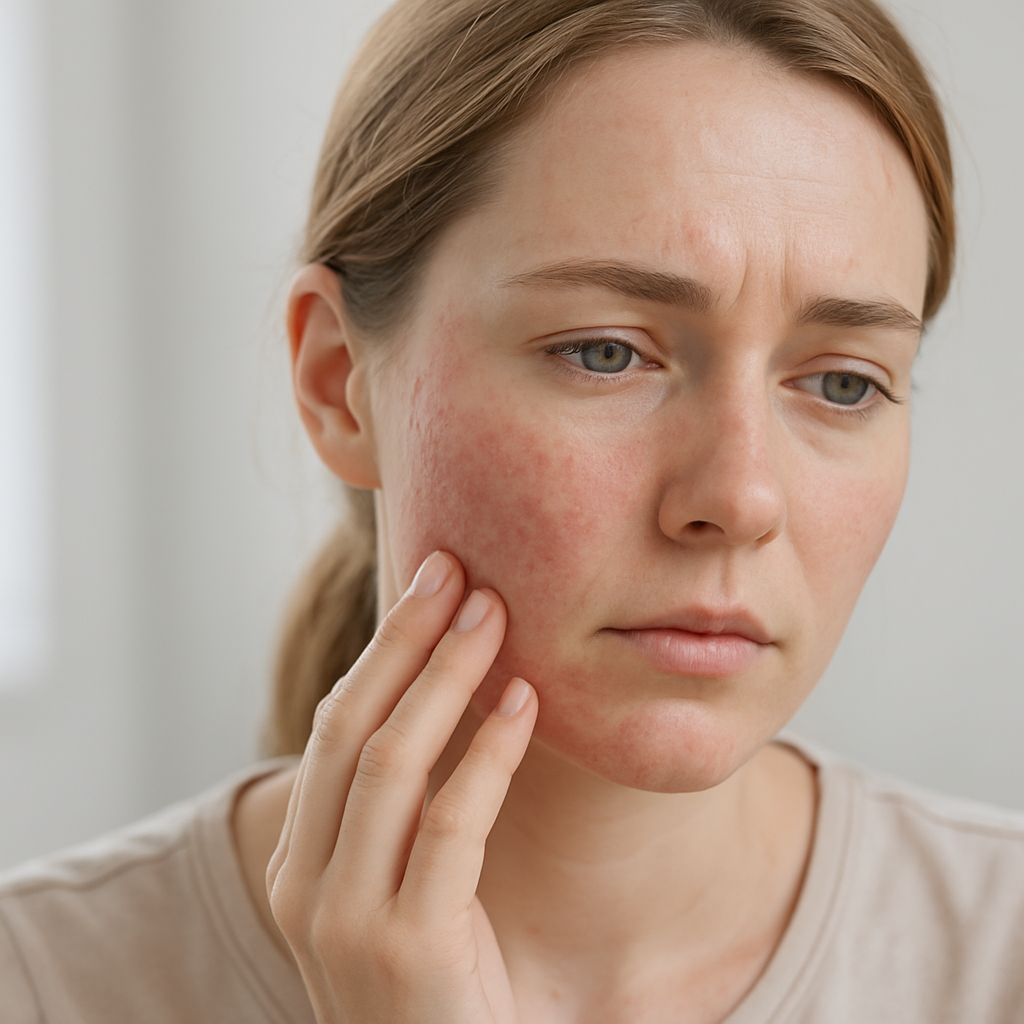
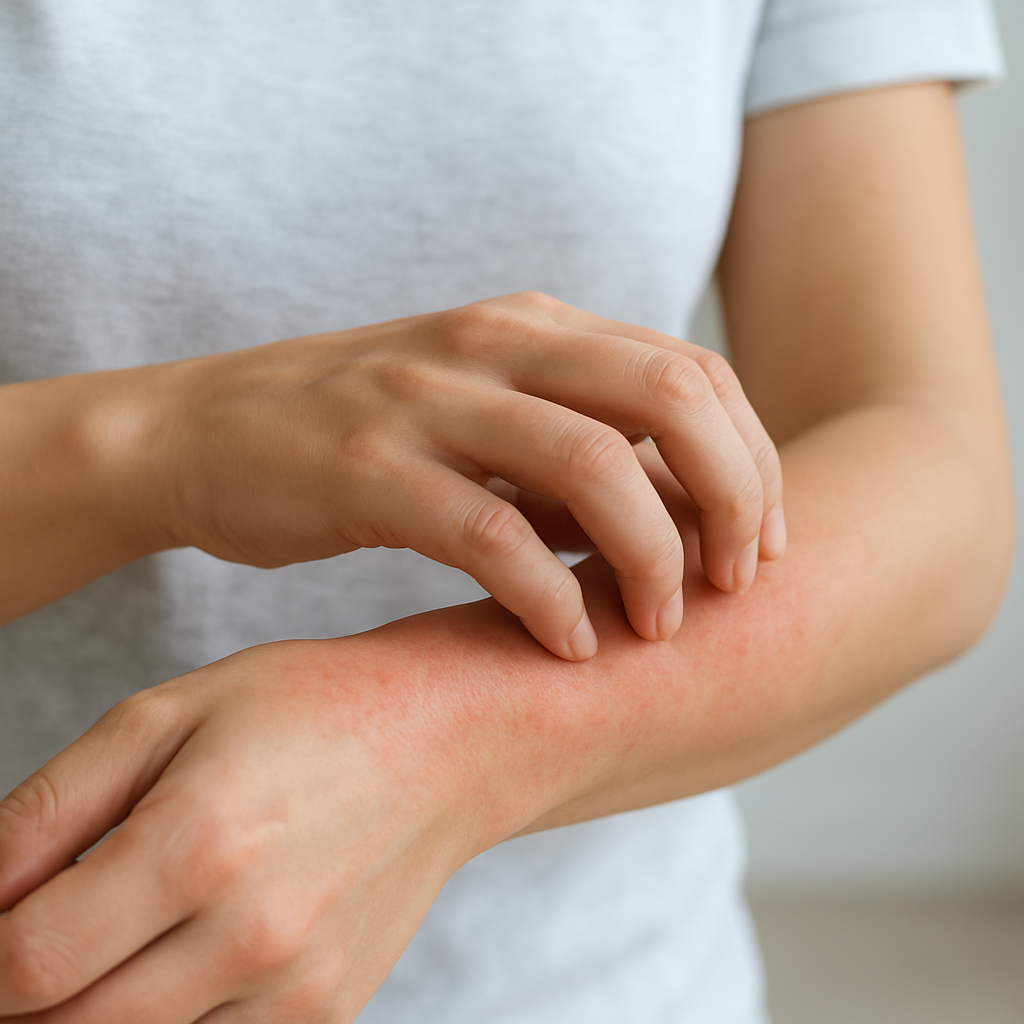
Atopic Dermatitis, also known as eczema or atopic eczema, creates intensely itchy, dry scaly skin with red inflamed patches. The itching often becomes severe enough to disrupt sleep and daily activities. You'll typically notice skin thickening in areas you scratch frequently, particularly around the face, neck, inner elbows, behind knees, hands, feet, wrists, and ankles. During flare-ups, the affected skin may develop oozing or crusting lesions that can appear alarming but rarely cause permanent scarring when properly treated.
Seborrheic dermatitis presents differently with yellow, greasy scales rather than dry ones. The scaling appears most prominently on oil-rich areas like your scalp, eyebrows, nose sides, and behind your ears. The redness tends to be less intense than atopic dermatitis, and the itching is generally milder and more manageable.
The itch intensity serves as a key distinguishing factor. Atopic dermatitis creates an almost unbearable urge to scratch that worsens at night, while seborrheic dermatitis causes mild to moderate itching that doesn't typically interfere with sleep. Scale characteristics also differ markedly: atopic dermatitis produces fine, dry flakes that easily brush away, whereas seborrheic dermatitis creates thicker, oily scales that stick to the skin.
Location patterns provide another helpful clue. Atopic dermatitis favors flexural areas where skin folds, especially in people with family history of allergies or asthma, genetic mutations, or exposure to environmental allergens and irritants. Seborrheic dermatitis concentrates on sebaceous gland-rich zones where oil production runs highest. Recognizing these distinct symptom patterns helps you seek appropriate treatment and avoid unnecessary worry about permanent skin damage.
Causes and Risk Factors
Understanding what triggers these skin conditions helps you recognize patterns and prevent future flare-ups. While both conditions affect similar areas, their underlying causes differ significantly.
Atopic Dermatitis stems from a genetic predisposition combined with skin barrier dysfunction and immune system overactivity. Your skin barrier—the protective outer layer—fails to retain moisture and keep irritants out. This creates a cycle where dry skin becomes inflamed, leading to scratching that further damages the barrier. Environmental triggers then easily penetrate compromised skin, causing the red, itchy patches that define this chronic inflammatory skin condition.
Risk factors for atopic dermatitis include family history of allergies or asthma, specific genetic mutations affecting skin proteins, environmental allergens like dust mites or pet dander, stress, and exposure to harsh soaps or detergents. Children with one parent having allergies face a 25% chance of developing atopic dermatitis, while having both parents affected raises this to 60%.
Seborrheic dermatitis operates differently. This condition results from an overgrowth of Malassezia yeast that naturally lives on your skin. When this yeast multiplies excessively, it triggers inflammation and the characteristic greasy, scaly patches. Unlike atopic dermatitis, seborrheic dermatitis has weaker genetic links.
Seborrheic dermatitis risk factors include hormonal changes, stress, cold dry weather, infrequent shampooing, neurological conditions like Parkinson's disease, and immunocompromised states. Men develop it more frequently than women, with peak onset occurring during infancy and again in adulthood between ages 30-60.
Environmental factors play larger roles in seborrheic dermatitis, while genetics dominate atopic dermatitis development. This difference affects treatment approaches and long-term management strategies.
Treatment Options: What Works for Each
Atopic Dermatitis requires a comprehensive treatment approach that targets both inflammation and the damaged skin barrier. Topical corticosteroids serve as the first-line treatment for flare-ups, with hydrocortisone being the mildest option for sensitive areas like the face, while stronger formulations like triamcinolone work better for thicker skin on the body. Moisturizers form the foundation of daily care, with ceramide-rich creams helping repair the compromised skin barrier that characterizes this chronic inflammatory skin condition.
Calcineurin inhibitors like tacrolimus offer a steroid-free alternative that's particularly valuable for long-term use around the eyes and face, where prolonged steroid use can cause thinning. For severe itching that disrupts sleep, antihistamines provide relief, though they work better for allergic triggers than for the itch itself. Advanced cases may require phototherapy treatments or systemic immunosuppressants like methotrexate, especially when topical treatments fail to control widespread inflammation.
Seborrheic dermatitis responds to completely different treatments because it stems from yeast overgrowth rather than immune dysfunction. Antifungal shampoos containing ketoconazole, selenium sulfide, or zinc pyrithione target the underlying Malassezia yeast. For facial involvement, antifungal creams work better than harsh shampoo formulations. Mild topical steroids can reduce inflammation quickly, but antifungals provide the lasting solution.
The fundamental difference lies in addressing root causes: Atopic Dermatitis treatments focus on calming an overactive immune system and repairing skin barriers, while seborrheic dermatitis treatments target fungal overgrowth and oil production. This explains why antifungal treatments that work brilliantly for seborrheic dermatitis have no effect on atopic dermatitis flares.
See a dermatologist when over-the-counter treatments fail after four weeks, when you experience signs of infection like yellow crusting, or when symptoms significantly impact your daily life and sleep quality.
Success depends on matching the right treatment to the correct diagnosis, as these conditions require fundamentally different therapeutic approaches.
Frequently Asked Questions
What's the difference between atopic dermatitis and seborrheic dermatitis?
The main difference is location and appearance. Atopic dermatitis typically appears in body creases like elbow bends, behind knees, and on wrists with dry, thick, intensely itchy skin. Seborrheic dermatitis shows up where oil glands are most active—scalp, eyebrows, nose sides, and chest center—and usually begins in adulthood.
Do atopic dermatitis and seborrheic dermatitis cause permanent scarring?
Neither condition typically causes permanent marks when treated properly. Atopic dermatitis responds well to moisturizers and prescription anti-inflammatories, while seborrheic dermatitis clears with antifungal treatments and gentle exfoliation. With proper treatment, both conditions can achieve 85% improvement without lasting damage.
How common is atopic dermatitis in children vs adults?
Atopic dermatitis affects 15-20% of children but only 1-3% of adults worldwide. The condition typically starts in childhood and requires ongoing management to prevent flare-ups. It's one of the most common skin disorders, making proper identification and treatment essential.
What areas of the body does atopic dermatitis affect?
Atopic dermatitis commonly appears on the face, neck, inner elbows, behind knees, hands, feet, wrists, and ankles. It particularly loves elbow and knee creases, showing up as dry, thick, and intensely itchy skin with a rough texture. Skin thickening can develop in areas of chronic scratching.
What causes atopic dermatitis and seborrheic dermatitis?
Atopic dermatitis stems from genetic predisposition combined with skin barrier dysfunction and immune system overactivity. Environmental triggers like allergens, stress, and irritants can worsen symptoms. Risk factors include family history of allergies or asthma, genetic mutations, and exposure to environmental allergens.
Disclaimer: This content is for informational purposes only and does not constitute medical advice. Always consult a qualified healthcare provider before making health decisions.