What Is Athlete's Foot (Tinea Pedis)

Athlete's foot, medically known as Tinea Pedis, is a common fungal infection that affects the skin on your feet. This condition occurs when specific fungi called dermatophytes invade the outer layers of your skin, creating uncomfortable and sometimes embarrassing symptoms.
“Athlete's foot is one of the most treatable skin conditions when addressed promptly with proper antifungal therapy.”
Three main fungal culprits cause this infection: Trichophyton rubrum, Trichophyton mentagrophytes, and Epidermophyton floccosum. These microscopic organisms thrive in warm, moist environments and feed on keratin, the protein found in your skin cells.
The infection typically targets the spaces between your toes, the soles of your feet, and sometimes extends to your toenails. Healthcare providers classify athlete's foot under medical code B35.3 for diagnostic and insurance purposes. While this infection rarely causes permanent damage or scarring when treated appropriately, prompt treatment prevents spreading to other body parts and reduces the risk of secondary bacterial infections.
Signs and Symptoms to Watch For

Recognizing athlete's foot early can prevent complications and help you avoid permanent scarring or embarrassing odor that many patients worry about. The condition typically starts with persistent itching between your toes, particularly in the fourth and fifth toe spaces where moisture gets trapped.
“Athlete's foot symptoms often mimic other conditions, making proper identification crucial for effective treatment.”
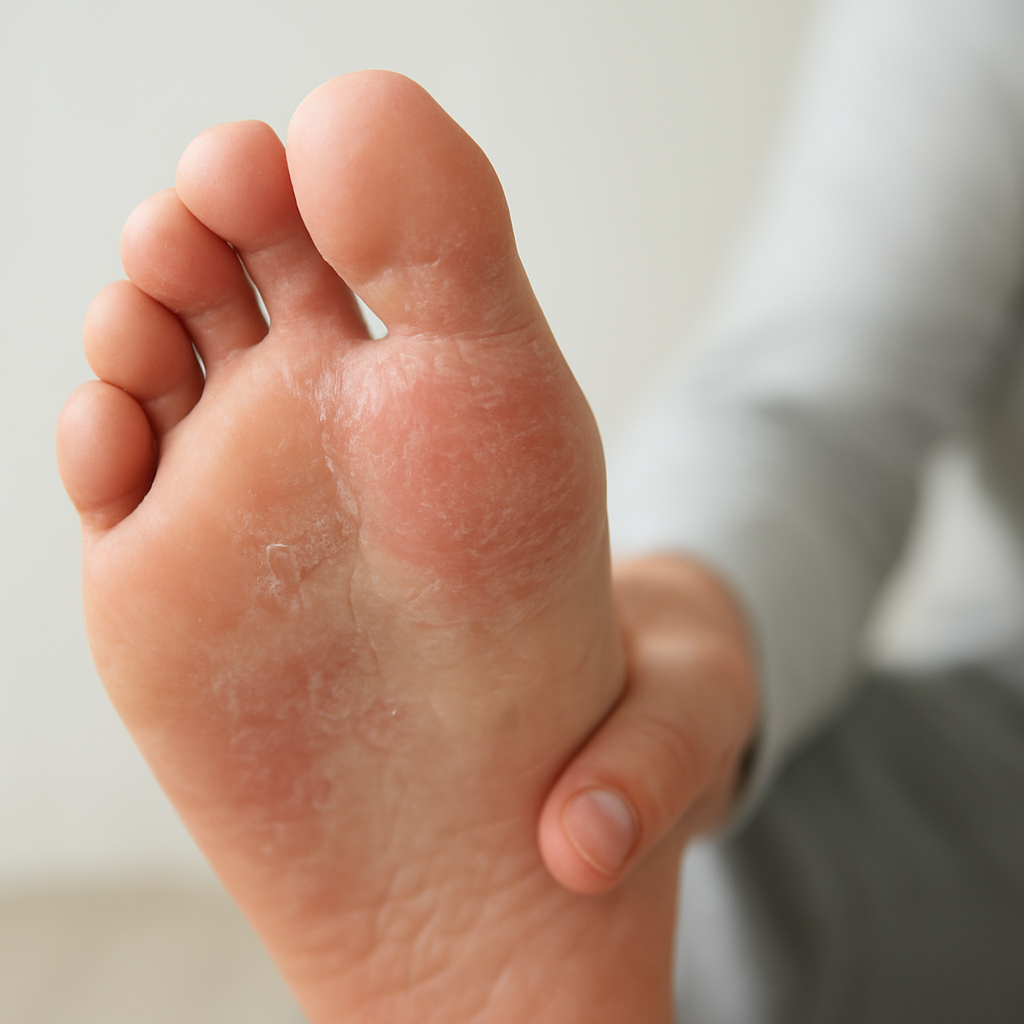
Common symptoms include burning sensations, peeling skin that looks like white flakes, and scaling that creates a rough texture. You may notice cracking between toes that can become painful, small fluid-filled blisters on your feet, redness around affected areas, and a distinctive musty odor.
Unlike Atopic Dermatitis (eczema), which affects 15-20% of children worldwide and causes intense itching with red inflamed patches on various body parts including hands and feet, athlete's foot typically remains localized to the feet and toe spaces. Eczema usually appears as dry, scaly patches that may ooze or crust, while athlete's foot presents with characteristic scaling and peeling between toes.
Seek medical attention if symptoms spread beyond your feet, if you develop signs of bacterial infection like pus or red streaks, or if you have diabetes or compromised immunity. These warning signs indicate potential complications requiring professional treatment.
What Causes Athlete's Foot and Risk Factors
Athlete's foot develops when specific fungi called dermatophytes invade the skin on your feet. The three main culprits are Trichophyton rubrum, Trichophyton mentagrophytes, and Epidermophyton floccosum. These microscopic organisms thrive in warm, moist environments and feed on keratin, the protein found in your skin.
Your risk increases dramatically in certain situations. Public swimming pools, locker rooms, and communal showers create perfect breeding grounds for these fungi. Walking barefoot in these areas exposes your feet directly to contaminated surfaces. Tight, poorly ventilated shoes trap moisture and heat, creating an ideal environment for fungal growth.
Athletes face higher susceptibility due to frequent use of communal facilities, prolonged periods in sweaty athletic shoes, and increased foot trauma that creates entry points for fungi. Excessive sweating, compromised immune systems, and conditions like diabetes also elevate your risk.
While athlete's foot rarely causes permanent scarring, prompt treatment prevents the embarrassing symptoms from worsening and spreading to other areas of your body or to family members through shared surfaces.
Treatment Options That Work
Most athlete's foot cases respond well to over-the-counter topical antifungal treatments. Apply antifungal creams containing terbinafine, miconazole, or clotrimazole twice daily to clean, dry feet. These medications target the fungus directly and typically show improvement within one to two weeks. Antifungal powders work excellently for prevention, especially when sprinkled inside shoes and socks before wearing them.
Severe or persistent infections may require prescription oral antifungal medications like terbinafine or itraconazole. Your healthcare provider might recommend these if topical treatments fail after four weeks or if the infection spreads beyond your feet. Oral medications work from inside your body but require monitoring for potential side effects.
Keep your feet dry and clean throughout treatment. Wash feet daily with antibacterial soap, dry thoroughly between toes, and change socks twice daily if they become damp. Choose moisture-wicking socks made from synthetic materials rather than cotton, which traps moisture.
See a healthcare provider if your symptoms worsen, spread to other body parts, or don't improve after four weeks of consistent treatment. Diabetics or people with compromised immune systems should seek professional care immediately rather than self-treating.
Good news: athlete's foot rarely causes permanent scarring when treated promptly and properly. Most people see significant improvement within two weeks, with complete clearance expected within four to six weeks of consistent treatment.
Prevention Strategies

Preventing athlete's foot is far easier than treating it. Good hygiene forms your first line of defense. Wash your feet daily with soap and water, paying special attention to the spaces between your toes. Dry thoroughly, especially between toes where moisture loves to hide.
Wash feet with antibacterial soap and dry completely, especially between toes.
Choose breathable shoes and moisture-wicking socks, alternating pairs daily.
Wear flip-flops in locker rooms, pools, and communal showers.
Your shoes matter tremendously. Leather and canvas allow better airflow than synthetic materials. Change socks daily and choose moisture-wicking fabrics over cotton. Rotate between at least two pairs of shoes to let each dry completely between wears.
Public spaces pose the biggest infection risk. Never walk barefoot in gyms, pools, or hotel bathrooms. Pack shower shoes for travel and gym visits. At home, keep feet dry and consider antifungal powder if you're prone to sweating.
When to See a Healthcare Provider
Most athlete's foot cases respond well to over-the-counter treatments, but certain warning signs indicate you need professional medical attention. Contact a healthcare provider if your infection spreads beyond your feet to other body parts, if you develop red streaking from the affected area, or if you notice pus-filled blisters.
People with diabetes, circulation problems, or compromised immune systems should seek medical care immediately when athlete's foot symptoms appear. These conditions increase your risk of serious complications including bacterial infections that can lead to permanent tissue damage.
Healthcare providers diagnose athlete's foot through visual examination and may perform a skin scraping test to confirm the fungal infection. This helps distinguish athlete's foot from similar conditions like eczema, psoriasis, or bacterial infections that require different treatments.
Watch for complications including cellulitis, which causes spreading redness and warmth, or lymphangitis, characterized by red streaking up your leg. These bacterial superinfections can develop when athlete's foot creates open wounds that allow harmful bacteria to enter your skin.
Seek immediate medical attention if you have diabetes, see red streaking, or notice the infection spreading beyond your feet.
Frequently Asked Questions
What is athlete's foot?
Athlete's foot, medically known as Tinea Pedis, is a common fungal infection that affects the skin on your feet. This condition occurs when specific fungi called dermatophytes invade the outer layers of your skin, creating uncomfortable and sometimes embarrassing symptoms. The infection typically targets the spaces between your toes, the soles of your feet, and sometimes extends to your toenails.
What are the symptoms of athlete's foot?
Common symptoms include persistent itching between your toes, burning sensations, and peeling skin that looks like white flakes. You may also notice cracking between toes that can become painful, small fluid-filled blisters on your feet, redness around affected areas, and a distinctive musty odor. The condition typically starts with itching between your toes, particularly in the fourth and fifth toe spaces where moisture gets trapped.
What causes athlete's foot?
Athlete's foot is caused by three main fungi: Trichophyton rubrum, Trichophyton mentagrophytes, and Epidermophyton floccosum. These microscopic organisms thrive in warm, moist environments and feed on keratin, the protein found in your skin cells. Your risk increases in public swimming pools, locker rooms, and communal showers, especially when walking barefoot in these contaminated areas.
How common is athlete's foot?
Athlete's foot affects approximately 15% of the population, with a 70% male predominance. It is one of the most common fungal infections affecting the feet. The typical treatment duration is around 4 weeks when addressed promptly with proper antifungal therapy.
When should I see a doctor for athlete's foot?
You should seek medical attention if symptoms spread beyond your feet, if you develop signs of bacterial infection like pus or red streaks, or if you have diabetes or compromised immunity. These warning signs indicate potential complications requiring professional treatment. While athlete's foot rarely causes permanent damage when treated appropriately, prompt treatment prevents spreading to other body parts.
Disclaimer: This content is for informational purposes only and does not constitute medical advice. Always consult a qualified healthcare provider before making health decisions.