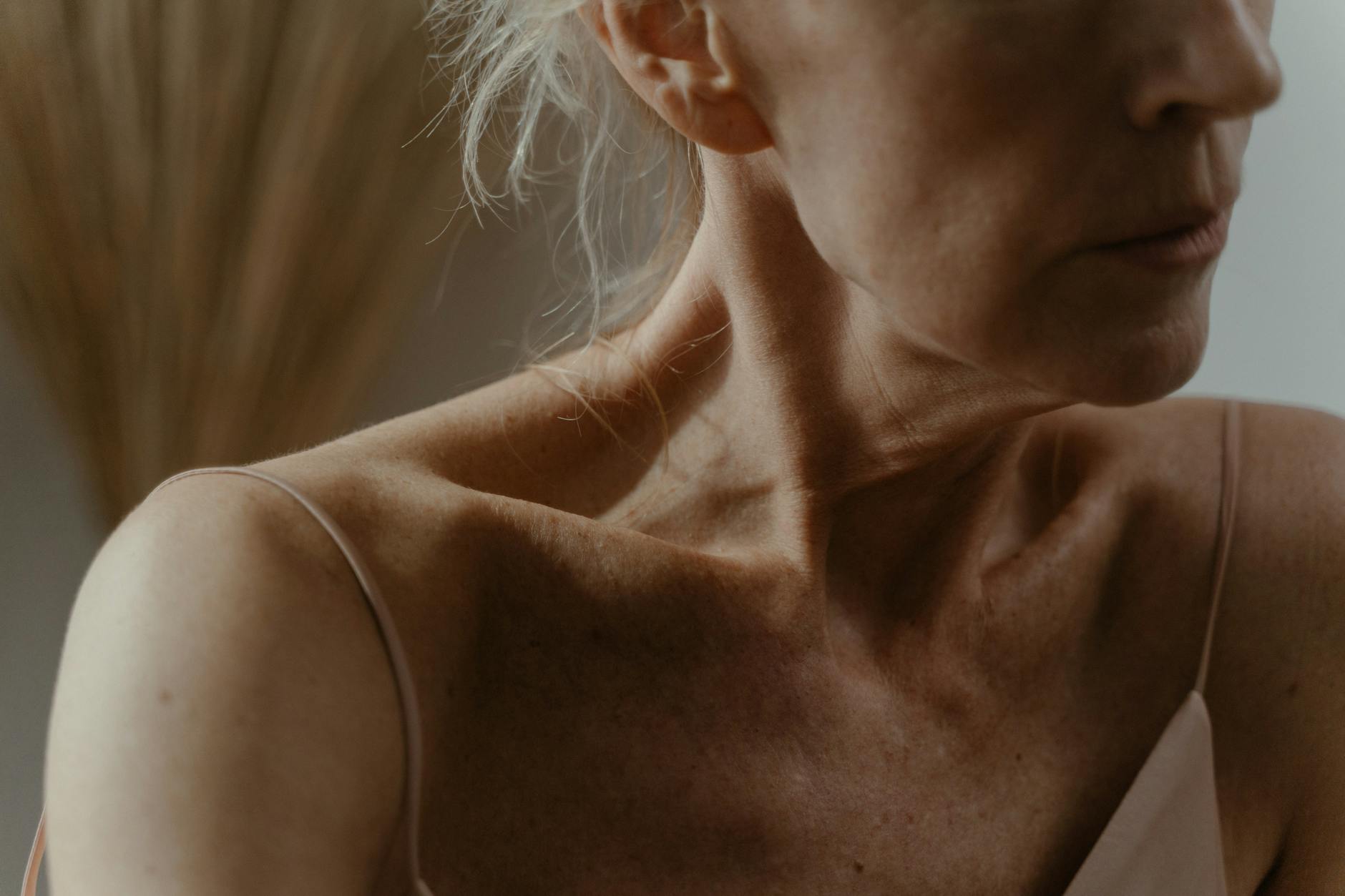

Understanding Menopause Skin Changes

Menopause brings dramatic shifts to your skin that go far beyond what many women expect. These changes stem from declining estrogen levels, which directly impact your skin's structure and function in measurable ways.
“Estrogen acts like your skin's personal trainer, keeping collagen and elastin production strong and steady.”
When estrogen drops during perimenopause and menopause, collagen production can decrease by up to 30% in the first five years. This protein gives skin its firmness and bounce. Elastin, which provides stretch and snap-back ability, also diminishes significantly. The result? Skin becomes thinner, less elastic, and more prone to wrinkles.
Your skin also loses its ability to retain moisture effectively. The natural barrier that keeps water in and irritants out weakens, leading to dryness and increased sensitivity. Some women notice these changes as early as their late thirties, while others see dramatic shifts around age 50 when estrogen levels plummet most rapidly.
While these changes won't cause permanent scarring, understanding them helps you adapt your skincare routine to support your evolving skin needs during this natural transition.
Common Skin Issues During Menopause

Menopause brings predictable changes to your skin that affect most women during this transition. Understanding these specific issues helps you recognize what's happening and why your usual skincare routine might not be working as well.
"During menopause, your skin essentially becomes a different type than what you've known for decades."
Increased dryness tops the list of menopausal skin concerns. Dry Skin develops as oil production drops significantly, leaving your complexion feeling tight and rough. Your skin may feel like it's constantly thirsty, no matter how much moisturizer you apply.
Loss of firmness and elasticity becomes noticeable as collagen production slows. Your skin may feel less "bouncy" when you touch it, and fine lines appear more prominent. This isn't permanent scarring, but rather structural changes that can be managed with proper care.
Changes in skin texture and tone often surprise women. Your complexion may become uneven, with some areas appearing dull or developing age spots. Sensitive Skin reactions increase as your protective barrier weakens, making products that never bothered you suddenly cause redness or irritation.
Slower healing and recovery means cuts, scratches, and breakouts take longer to resolve. This delayed healing process is frustrating but temporary with proper skincare adjustments.
How Your Skin Type May Change
Menopause doesn't just affect your hormones—it fundamentally alters your skin type. If you've always had Oily Skin characterized by overactive sebaceous glands producing excess oil, you might notice your skin becoming normal or even dry as estrogen levels drop. This shift reduces sebum production, leaving previously shiny skin feeling tight or rough.
Women with normal skin often develop dry patches during menopause, particularly around the cheeks and jawline. Your skin may start showing signs of Dry Skin that lacks moisture and natural oils, feeling increasingly tight and developing a dull appearance.
Sensitive Skin becomes more common across all skin types during menopause. Your skin may now react easily to products that never caused problems before, showing redness, burning, or irritation. Even Combination Skin patterns shift, requiring you to completely reassess your skincare routine to match your evolving needs.
Adjusting Your Skincare Routine
Your menopausal skin demands a complete routine overhaul. The products that worked for decades may now cause irritation or fail to address new concerns like dryness and loss of firmness.
Switch to cream-based cleansers instead of foaming formulas. Foaming cleansers strip essential oils your skin desperately needs to retain. Look for cleansers with ceramides or glycerin that clean without leaving your face feeling tight.
Use lukewarm water and a gentle cream cleanser for 30 seconds.
Pat hyaluronic acid serum on damp skin to lock in moisture.
Apply a rich moisturizer while skin is still slightly damp.
Add retinol or peptide cream twice weekly to address firmness.
Many women develop Sensitive Skin during menopause, so introduce new products one at a time. Test each product for a week before adding another to avoid overwhelming your skin barrier.
Simplify your routine to three essential steps: cleanse, treat, and moisturize. Complex routines with multiple active ingredients often backfire, causing redness and irritation that takes weeks to resolve.
Key Ingredients for Menopausal Skin
Choosing the right skincare ingredients becomes crucial during menopause when hormonal changes accelerate skin aging. Four powerhouse ingredients can help restore your skin's health and prevent future damage concerns.
Hyaluronic acid acts like a moisture magnet, holding up to 1,000 times its weight in water. This ingredient plumps your skin from within, reducing the appearance of fine lines that become more prominent during menopause. Look for serums containing sodium hyaluronate, a smaller molecule that penetrates deeper than regular hyaluronic acid.
Retinoids stimulate collagen production to combat the accelerated breakdown that occurs during menopause. Start with retinol products twice weekly, gradually increasing frequency as your skin adjusts.
Ceramides rebuild your skin's protective barrier, which weakens with declining estrogen levels. These lipids prevent moisture loss and shield against environmental damage.
Peptides signal your skin to produce more collagen and elastin, helping maintain firmness. Copper peptides and palmitoyl pentapeptide-4 show the strongest research backing for menopausal skin concerns.
When to Seek Professional Help
While many menopausal skin changes respond well to over-the-counter treatments, some situations require dermatologist intervention. Recognizing these warning signs helps you get appropriate care before concerns worsen.
Schedule a consultation if you experience persistent dryness or irritation that doesn't improve after four weeks of proper skincare. This could indicate underlying conditions like eczema or contact dermatitis that need prescription treatment.
Significant texture changes warrant professional evaluation, especially sudden roughness, thickening, or unusual bumps. These changes might signal hormonal imbalances requiring medical management or other skin conditions needing targeted therapy.
Any new or changing spots demand immediate attention. While most are benign, early detection of potential problems prevents serious complications and reduces treatment complexity.
Dermatologists offer advanced treatment options including prescription retinoids, hormone therapy guidance, professional-grade chemical peels, and laser treatments. These interventions can address stubborn concerns that home care cannot resolve, helping you achieve healthier skin without permanent damage or scarring.
Don't wait for skin problems to worsen—early dermatologist intervention prevents complications and offers more effective treatment options.
Frequently Asked Questions
Why does skin change during menopause?
Menopause causes dramatic skin changes due to declining estrogen levels, which directly impact your skin's structure and function. When estrogen drops, collagen production can decrease by up to 30% in the first five years, making skin thinner, less elastic, and more prone to wrinkles. Estrogen acts like your skin's personal trainer, keeping collagen and elastin production strong and steady.
What are the most common skin problems during menopause?
The most common skin issues during menopause include increased dryness, loss of firmness and elasticity, and changes in skin texture and tone. Your skin may feel constantly thirsty despite using moisturizer, and it becomes less bouncy to the touch with more prominent fine lines. Many women also experience uneven complexion, age spots, increased sensitivity, and slower healing of cuts or breakouts.
How much collagen do you lose during menopause?
During menopause, collagen production can decrease by up to 30% in the first five years. After menopause, collagen continues to decrease by approximately 2.1% each year. This significant loss of collagen is what causes skin to become less firm and more prone to wrinkles.
Can your skin type change during menopause?
Yes, menopause can fundamentally alter your skin type due to hormonal changes. Women who have always had oily skin may notice it becoming normal or even dry as estrogen levels drop and reduce sebum production. Those with normal skin often develop dry patches during menopause, particularly around the cheeks and jawline.
When do menopausal skin changes start?
Some women notice skin changes as early as their late thirties during perimenopause. However, the most dramatic shifts typically occur around age 50 when estrogen levels plummet most rapidly. The timing varies from woman to woman, but the changes become more noticeable as hormone levels continue to decline.
Disclaimer: This content is for informational purposes only and does not constitute medical advice. Always consult a qualified healthcare provider before making health decisions.