Why Timing Matters in Your Skincare Routine

Your skin operates on its own biological clock, and understanding this rhythm can mean the difference between products that work and expensive bottles that sit unused on your bathroom counter. During the day, your skin focuses on protection against environmental stressors like UV rays and pollution. At night, it shifts into repair mode, rebuilding collagen and processing the day's damage.
“Applying the right product at the wrong time can reduce its effectiveness by up to 50%.”
Product absorption follows specific principles. Heavier creams applied over lightweight serums create a barrier that blocks penetration. Similarly, active ingredients like retinol become less effective when competing with thick moisturizers for skin access. Many people make the mistake of layering day cream immediately after cleansing, skipping essential treatments that need direct skin contact.
Poor timing won't cause permanent scarring, but it will slow your progress toward clear skin. When products can't penetrate properly, breakouts persist longer than necessary, extending the frustrating journey to healthy skin.
The Complete Morning Skincare Order
Your morning routine follows a simple but crucial rule: apply products from thinnest to thickest consistency. This ensures each product absorbs properly and delivers maximum benefits without pilling or creating a barrier that blocks subsequent products.
Remove overnight buildup with a gentle cleanser suited to your skin type.
Apply water-based treatments to freshly cleansed skin.
Layer lightweight treatment serums like vitamin C or niacinamide.
Lock in previous products with your moisturizer containing beneficial ingredients.
Always finish with broad-spectrum SPF 30 or higher for protection.
Wait 30-60 seconds between each step, allowing proper absorption. Rushing this process can cause products to mix incorrectly or roll off your skin. For example, applying sunscreen immediately over wet serum creates an uneven protective layer that may leave you vulnerable to sun damage and potential scarring.
"Day cream acts as the crucial bridge between lightweight treatments and your protective sunscreen barrier."
Step-by-Step Day Cream Application

Wait exactly three to five minutes after applying your serum before reaching for your day cream. This timing allows your serum to absorb properly without creating a slippery layer that interferes with cream application.
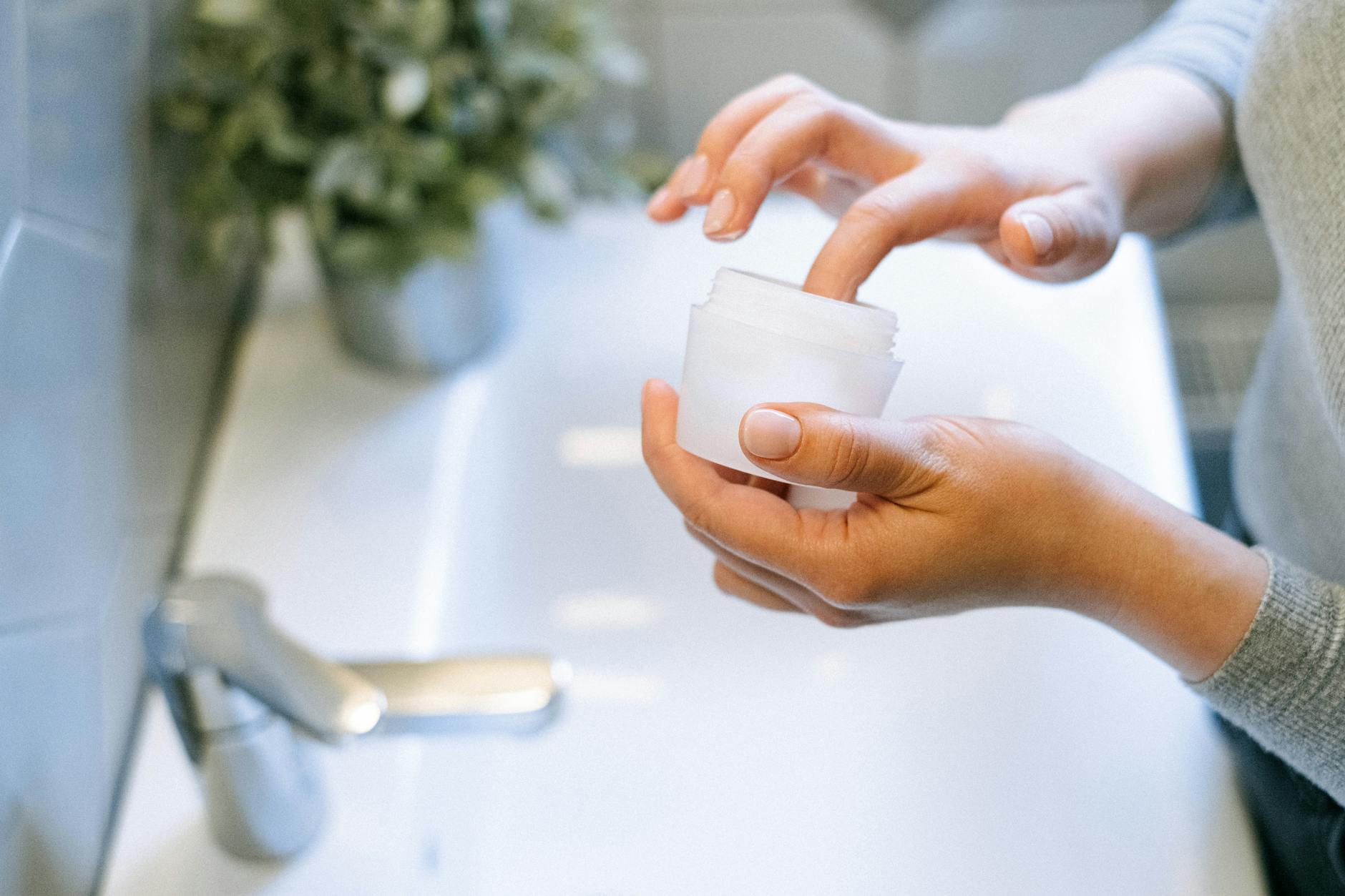
Squeeze a pea-sized amount onto your fingertip—this covers your entire face without waste.
Rub the cream between your fingertips for three seconds to warm it before application.
Start at your forehead, work down to cheeks, then finish with nose and chin using gentle upward strokes.
Pat and press gently until the cream disappears completely—no white residue should remain.
Cover your entire face including often-missed areas like your hairline, jaw edge, and around your ears. Skip the immediate eye area unless your day cream specifically states it's safe for eyes. Proper application prevents uneven protection and reduces the risk of irritation that could worsen existing skin concerns.
What to Apply Before Day Cream
Your day cream works best when applied to properly prepared skin. The products you use beforehand can make or break your routine's effectiveness.
Start with a gentle cleanser to remove overnight buildup. Clean skin absorbs products better and reduces the risk of clogged pores that can lead to breakouts. Wait 30 seconds after cleansing before applying your next product.
Use vitamin C serums or acne treatments on clean skin before day cream.
Allow 2-3 minutes for serums to absorb completely before adding day cream.
Serums and treatments should always go on before day cream since they contain active ingredients that need direct skin contact. Applying day cream first creates a barrier that blocks these beneficial ingredients from penetrating your skin effectively.
What to Apply After Day Cream
After your day cream has absorbed for 2-3 minutes, sunscreen becomes your most critical next step. Apply a broad-spectrum SPF 30 or higher to protect your healing skin and prevent the dark spots and scarring that worry many people dealing with breakouts.
Wait 2-3 minutes after day cream, then apply SPF evenly across face and neck.
Wait another 5 minutes before applying primer or foundation for best results.
For makeup application, primer works well over sunscreen after a brief wait. Foundation and concealer can help cover existing blemishes while your skincare routine works to clear them. Remember that skipping sunscreen undermines your entire routine by allowing UV damage to worsen acne marks and delay healing.
Common Timing Mistakes to Avoid

Rushing between product application steps ranks as the biggest mistake beginners make. Your skin needs time to absorb each layer properly—typically 30 seconds to 2 minutes depending on the product thickness.
Wrong product order creates another major pitfall. Applying day cream before your treatment serums blocks active ingredients from penetrating effectively. Always follow the thin-to-thick rule: cleanse, tone, treat with serums, then moisturize with day cream.
Skipping wait times between steps dilutes effectiveness. When you pile products on immediately, they mix together instead of working independently. This reduces their individual benefits and can cause pilling or white residue.
Over-application wastes product and clogs pores. A pea-sized amount of day cream covers your entire face adequately. Using more won't speed results and may actually slow your progress toward clear skin by overwhelming your pores with excess product.
Special Considerations for Different Skin Types
Your skin type significantly influences when and how to apply day cream for optimal results without risking irritation that could lead to unwanted blemishes.
Dry skin benefits from applying day cream on slightly damp skin, which helps lock in moisture more effectively. Wait only 30-60 seconds after cleansing before application, when your skin still feels slightly moist but not dripping wet. This timing maximizes hydration retention throughout the day.
Oily skin requires a different approach. Allow your skin to dry completely after cleansing—typically 2-3 minutes—before applying a lightweight day cream. This prevents mixing water with oils on your skin's surface, which can clog pores and create an environment for breakouts.
Sensitive skin needs extra caution with timing. Apply day cream to completely dry skin and wait 5-10 minutes between each skincare step. This prevents ingredient interactions that might trigger redness or irritation. Choose products with fewer active ingredients and patch test new formulations on a small area first.
Adjust your day cream timing based on your skin type—damp application for dry skin, fully dry for oily skin, and extra waiting time for sensitive skin.
Frequently Asked Questions
What order should I apply my morning skincare products?
Apply products from thinnest to thickest consistency: cleanser, toner or essence, serums, day cream, then sunscreen. This ensures each product absorbs properly and delivers maximum benefits without creating barriers. Wait 30-60 seconds between each step to allow proper absorption.
Why does timing matter in skincare routines?
Your skin operates on its own biological clock, focusing on protection during the day and repair at night. Applying the right product at the wrong time can reduce its effectiveness by up to 50%. Poor timing prevents products from penetrating properly, which can slow your progress toward clear skin.
How long should I wait between applying serums and day cream?
Wait exactly three to five minutes after applying your serum before applying day cream. This timing allows your serum to absorb properly without creating a slippery layer that interferes with cream application. Rushing this process can cause products to mix incorrectly or roll off your skin.
How much day cream should I use on my face?
Use a pea-sized amount of day cream for your entire face to avoid waste. Rub the cream between your fingertips for three seconds to warm it before application. This amount provides adequate coverage without overloading your skin.
What happens if I apply skincare products in the wrong order?
Applying heavier creams over lightweight serums creates a barrier that blocks penetration of the underlying products. This reduces the effectiveness of your active ingredients and can slow your progress toward healthy skin. While poor timing won't cause permanent scarring, it will make breakouts persist longer than necessary.
Disclaimer: This content is for informational purposes only and does not constitute medical advice. Always consult a qualified healthcare provider before making health decisions.