Why Your Skin Changes in Your 40s

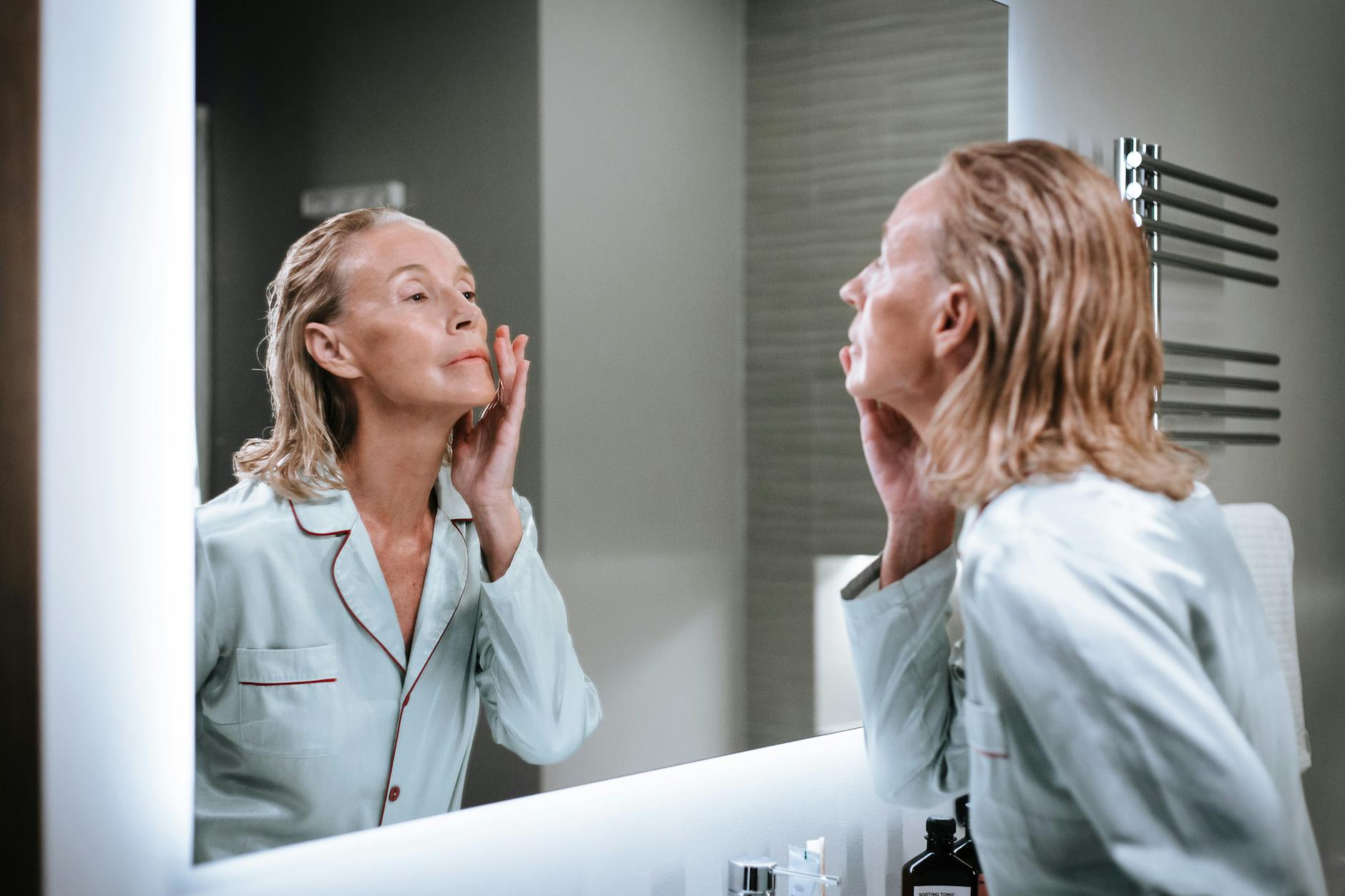
Your skin undergoes significant transformations during your 40s that can feel overwhelming, but understanding these changes helps you address them effectively. Collagen and elastin production drops dramatically, reducing your skin's firmness and bounce-back ability. This natural decline creates the foundation for visible aging signs you may start noticing.
“Collagen production decreases by about 1% per year after age 20, making your 40s a critical time for intervention.”
Hormonal fluctuations, particularly declining estrogen levels, affect your skin's texture and moisture retention. Your skin becomes thinner and drier, making fine lines more apparent. Cell turnover slows considerably, meaning your skin takes longer to repair and regenerate itself.
Years of sun exposure finally become visible as dark spots, uneven tone, and deeper wrinkles emerge. While these changes may concern you about permanent damage, implementing the right routine now can significantly improve your skin's appearance and prevent future deterioration.
Essential Morning Routine Steps

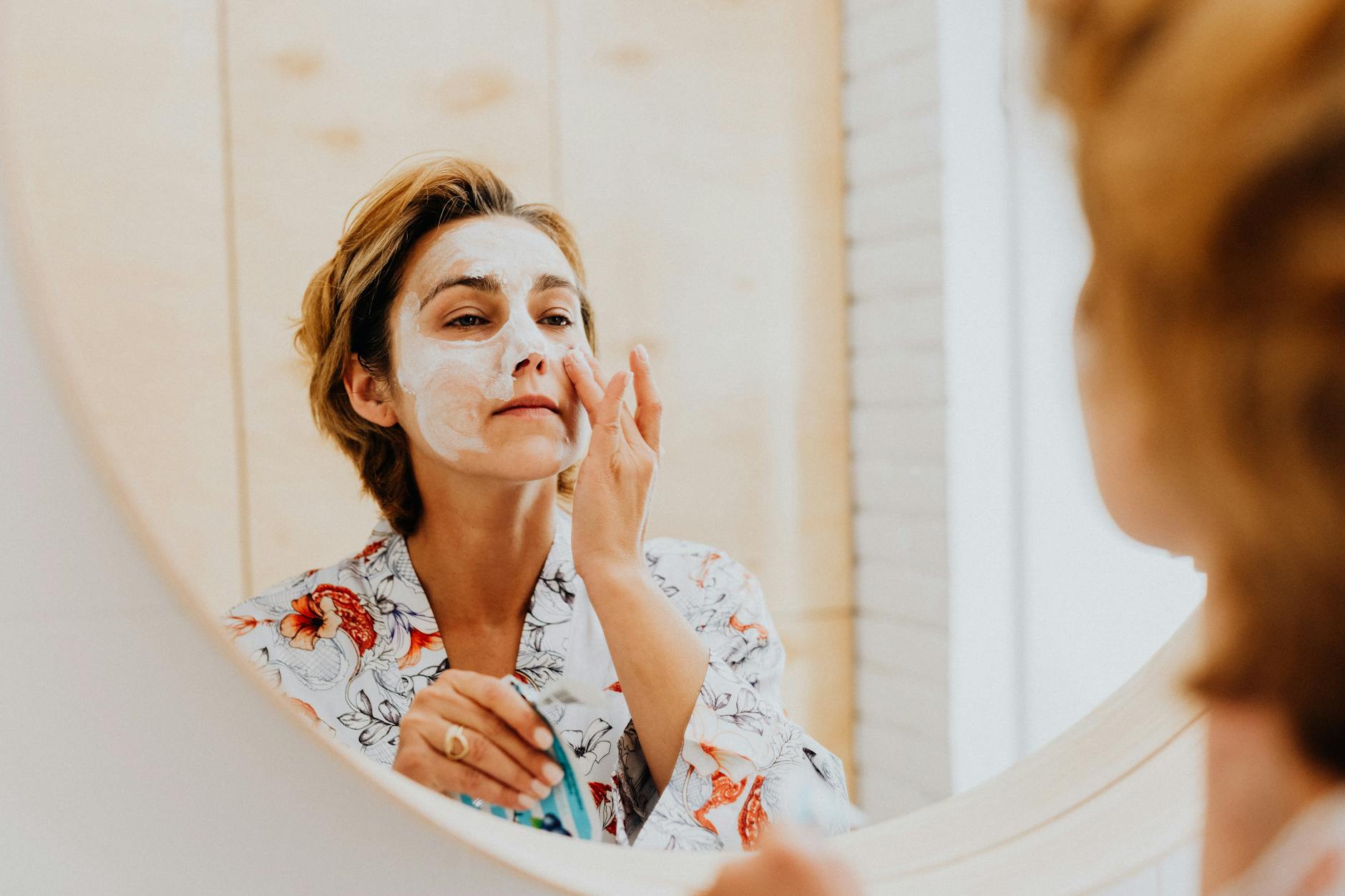
Your morning routine sets the foundation for healthy skin throughout the day. Starting with proper cleansing removes overnight impurities without stripping your skin's protective barrier.
Use a cream or gel cleanser with ceramides to maintain your skin's moisture barrier while removing dirt and oils.
Apply 2-3 drops of L-ascorbic acid serum to brighten skin and protect against environmental damage.
Smooth on a moisturizer containing peptides to support collagen production and maintain plumpness.
Finish with mineral or chemical sunscreen to prevent UV damage and age spots.
"Consistency with your morning routine prevents more damage than any single miracle product ever could."
This routine takes just five minutes but addresses your skin's changing needs in your 40s. Wait 60 seconds between each step to allow proper absorption.
Essential Evening Routine Steps
Your nighttime routine is when the real magic happens. While you sleep, your skin works overtime to repair daily damage and regenerate cells. This natural repair process becomes even more crucial in your 40s as cell turnover slows down.
Start with an oil-based cleanser to remove makeup and sunscreen, followed by a gentle water-based cleanser to eliminate remaining impurities.
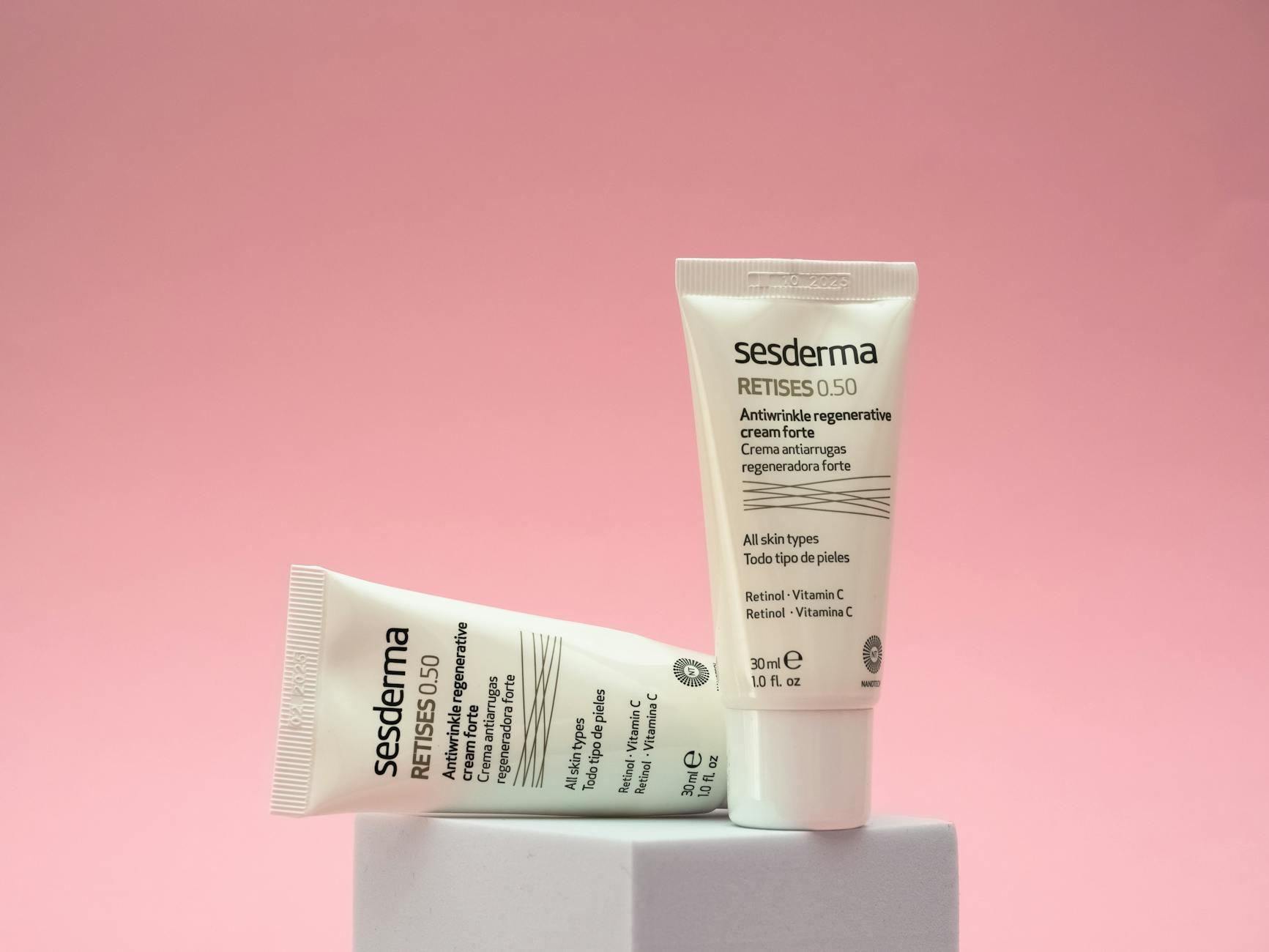
Use a pea-sized amount of retinol product after cleansing to boost collagen production and accelerate cell renewal.
Apply a hyaluronic acid serum to plump skin and lock in moisture throughout the night.
Finish with a nourishing night cream containing ceramides or peptides to support your skin barrier while you rest.
Key Ingredients to Focus On
Your skin's needs evolve in your 40s, making ingredient selection crucial for maintaining healthy, resilient skin. The right active ingredients can address multiple concerns simultaneously while building long-term skin health.
Retinoids remain the gold standard for anti-aging. These vitamin A derivatives accelerate cell turnover, smoothing fine lines and improving skin texture. Start with retinol twice weekly, gradually increasing frequency as your skin adjusts.
Peptides signal your skin to produce more collagen, helping maintain firmness. Hyaluronic acid draws moisture into skin cells, plumping fine lines and creating a smoother appearance. Niacinamide regulates oil production while minimizing pores and evening skin tone.
These ingredients work synergistically when layered properly: hyaluronic acid first, followed by niacinamide, then peptides, with retinoids applied last in your evening routine.
Common Mistakes to Avoid

Even well-intentioned skincare routines can backfire when you make these critical errors. Over-exfoliating ranks as the biggest mistake—using chemical exfoliants daily or combining multiple acids will irritate your skin and worsen existing concerns rather than improve them.
Skipping sunscreen remains inexcusable at any age, but especially in your 40s when sun damage accelerates aging. Using too many active ingredients simultaneously overwhelms your skin barrier. Start with one new ingredient every two weeks to prevent reactions that could cause permanent scarring.
Don't neglect your neck and chest areas—they show aging just as prominently as your face and need the same gentle care and protection.
Building Your Routine Gradually
Start with a basic three-step routine: gentle cleanser, moisturizer, and sunscreen. Master these fundamentals before adding treatments. Your skin needs time to adjust without becoming overwhelmed or irritated.
Use cleanser, moisturizer, and sunscreen for two weeks before adding actives.
Add retinol or vitamin C every third night initially.
Increase usage gradually based on how your skin responds.
Watch for redness, peeling, or breakouts when introducing new products. These signs mean you're moving too fast. Slow introduction prevents damage and helps you identify which products work best for your unique skin needs.
Build your anti-aging routine slowly over months, not weeks, to achieve lasting results without irritation.
Frequently Asked Questions
Why does skin change so much in your 40s?
Skin undergoes significant transformations in your 40s due to dramatically decreased collagen and elastin production, which reduces firmness and elasticity. Hormonal fluctuations, particularly declining estrogen levels, affect skin texture and moisture retention, making it thinner and drier. Cell turnover also slows considerably, meaning skin takes longer to repair and regenerate itself. Years of accumulated sun exposure become visible as dark spots, uneven tone, and deeper wrinkles emerge.
What should I use in my morning skincare routine for my 40s?
Start with a gentle cream or gel cleanser containing ceramides to maintain your skin's moisture barrier. Follow with 2-3 drops of vitamin C serum to brighten skin and protect against environmental damage, then apply a peptide moisturizer to support collagen production. Finish with broad-spectrum SPF 30+ mineral or chemical sunscreen to prevent UV damage and age spots.
How long should I wait between skincare steps?
You should wait 60 seconds between each step to allow proper absorption. This timing ensures each product can penetrate the skin effectively before applying the next layer. The entire morning routine takes just five minutes but addresses your skin's changing needs in your 40s.
What's the most important step in an evening skincare routine for aging skin?
Retinol or retinoid application is crucial for aging skin in your 40s, as it boosts collagen production and accelerates cell renewal. Use a pea-sized amount after cleansing during your nighttime routine when skin works overtime to repair daily damage. This step becomes even more important in your 40s as natural cell turnover slows down significantly.
How much does collagen decrease as we age?
Collagen production decreases by about 1% per year after age 20, making your 40s a critical time for intervention. This dramatic decline in collagen and elastin production reduces your skin's firmness and bounce-back ability. The cumulative effect of this yearly decrease creates the foundation for visible aging signs that become apparent in your 40s.
Disclaimer: This content is for informational purposes only and does not constitute medical advice. Always consult a qualified healthcare provider before making health decisions.