What Are Prescription Psoriasis Treatments

Prescription psoriasis treatments are medications that require a doctor's authorization to obtain and use. These powerful therapies target plaque psoriasis (also called psoriasis vulgaris, medical code L40.0) when over-the-counter options fail to control the thick, scaly patches that characterize this condition.
You typically need prescription treatments when drugstore creams and ointments cannot penetrate thick plaques or when psoriasis covers more than 3% of your body surface area (roughly the size of your palm). Many patients worry about permanent scarring, but prescription therapies can prevent this outcome by effectively controlling inflammation before it damages deeper skin layers.
"Prescription treatments work by targeting the specific immune pathways that cause psoriasis flares."
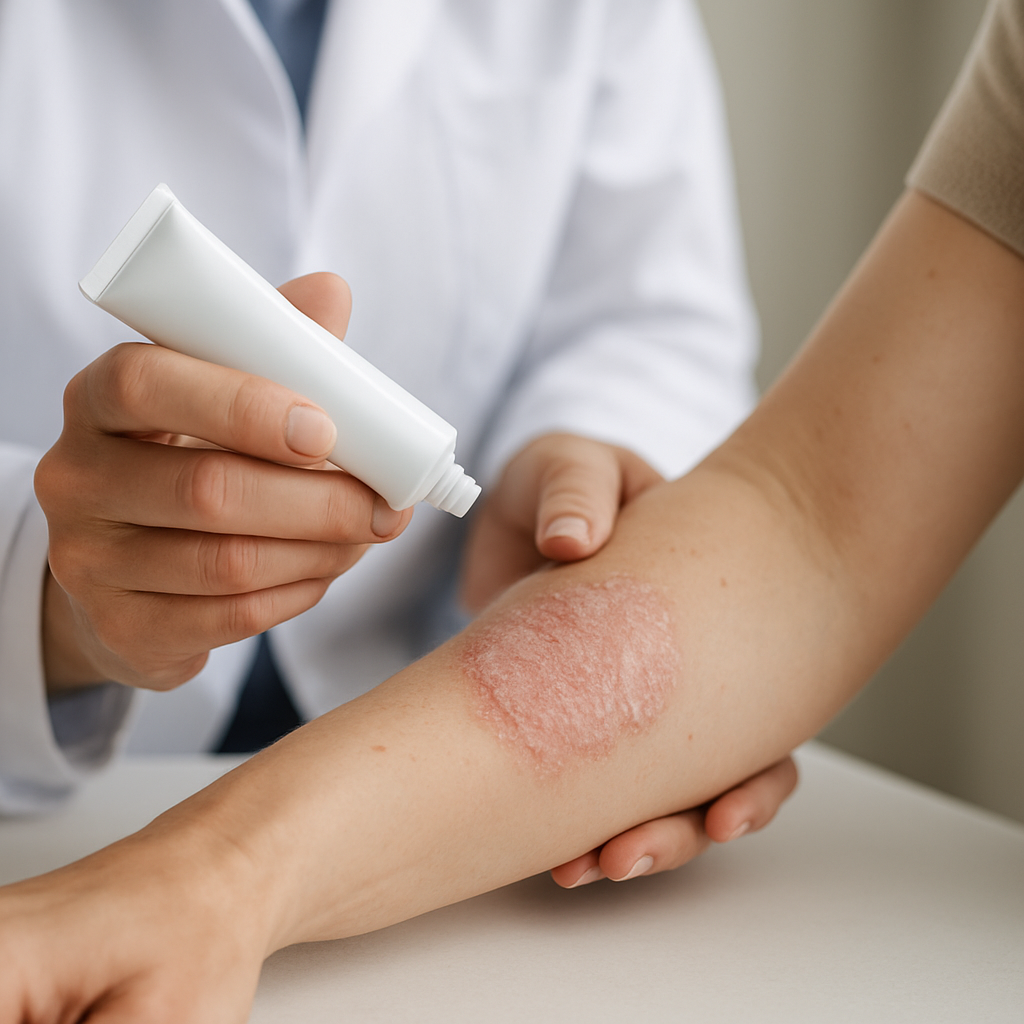
Common prescription options include topical corticosteroids, vitamin D analogs, retinoids, and systemic medications like biologics. For example, a patient with stubborn elbow plaques might receive a high-potency steroid cream that reduces inflammation within days, while someone with widespread disease may need oral or injectable medications that work throughout the entire immune system.
Types of Prescription Psoriasis Medications

Prescription psoriasis treatments fall into five main categories, each targeting different aspects of plaque psoriasis symptoms. Understanding these options helps you work with your dermatologist to find the right approach for your skin.
Topical corticosteroids represent the most commonly prescribed first-line treatment. These anti-inflammatory medications reduce the redness, swelling, and itching that characterize psoriasis plaques. Examples include clobetasol propionate and betamethasone dipropionate, which dermatologists often prescribe for limited areas of affected skin.
“The key to successful psoriasis treatment lies in matching the right medication category to your specific symptoms and severity level.”
Vitamin D analogs like calcipotriene work differently by slowing down the rapid cell turnover that creates thick, scaly patches. These treatments help normalize skin cell production without the side effects associated with long-term steroid use.
Coal tar preparations, though less popular today, effectively reduce scaling and inflammation. Modern formulations smell less offensive than older versions and work particularly well for scalp psoriasis.
For severe cases covering large body areas, systemic immunosuppressants like methotrexate or cyclosporine work throughout your entire system. These medications require regular monitoring but can provide significant relief when topical treatments prove insufficient.
Biologics represent the newest category, targeting specific immune system proteins that drive psoriasis inflammation. Medications like adalimumab and etanercept offer hope for achieving clear skin and preventing the permanent scarring that concerns many patients.
How Prescription Treatments Work
Prescription treatments for plaque psoriasis target the root cause: your immune system mistakenly attacking healthy skin cells. This autoimmune dysfunction creates a cascade of inflammation that accelerates skin cell production from the normal 28-day cycle to just 3-4 days.
These medications work through three main mechanisms. First, they suppress the overactive immune response that triggers plaque formation. Second, they reduce inflammation in the affected skin areas, which helps calm the red, angry appearance that causes social embarrassment. Third, they slow down the rapid skin cell turnover that creates those thick, scaly patches.
By addressing inflammation, these treatments help reduce the silvery-white scales that accumulate on plaques. When skin cell production returns to a more normal pace, your skin has time to shed cells naturally instead of building up thick patches. This process takes time, but most patients see improvement within 12-16 weeks of starting treatment, with minimal risk of permanent scarring when properly managed.
Who Should Consider Prescription Treatment
Prescription treatment becomes necessary when plaque psoriasis symptoms interfere with daily life or cause significant discomfort. You should consult a dermatologist if you experience thick, scaly patches that persist despite over-the-counter treatments, especially when accompanied by intense itching, burning sensations, or skin that cracks and bleeds.
Several risk factors increase your likelihood of developing plaque psoriasis. Family history plays a significant role—having a parent or sibling with psoriasis increases your risk substantially. Other triggers include chronic stress, streptococcal infections, and certain medications.
Location matters when assessing severity. Psoriasis commonly affects highly visible areas like the scalp, face, and hands, or friction-prone zones including elbows, knees, and lower back. When patches appear on these areas, prescription treatment can prevent the permanent scarring and skin discoloration that worry many patients.
Age also influences treatment decisions. While plaque psoriasis typically develops between ages 15-35, early intervention with prescription therapies can prevent progression to more severe forms and maintain clearer skin long-term.
Combining with Professional Procedures

Chemical Peels offer a strategic complement to prescription psoriasis treatments, providing controlled chemical exfoliation that improves skin texture and appearance. These acid treatments remove damaged skin layers, helping reduce the scaly buildup characteristic of psoriasis while addressing concerns about uneven skin tone that often worry patients.
Timing coordination with your dermatologist proves essential for safe treatment combinations. Chemical peels work best when psoriasis inflammation is controlled through prescription medications, preventing adverse reactions or excessive irritation that could worsen existing plaques.
Discontinue retinoids one week prior and inform your provider about current psoriasis medications.
Skin is cleansed, chemical solution applied evenly, and neutralized after predetermined time.
Follow-up occurs within two weeks with strict sun protection for 7-14 days.
Results typically appear within one to four weeks, showing improved texture and more even skin tone that enhances the effectiveness of ongoing prescription psoriasis management.
Getting Started with Prescription Treatment
Schedule a dermatology appointment if you notice thick, scaly patches that don't respond to over-the-counter treatments within 2-3 weeks. Plaque Psoriasis typically presents as raised, red patches with silvery scales on elbows, knees, or scalp. Don't wait if patches spread rapidly or cause significant discomfort.
Your first consultation will include a visual examination and medical history discussion. The dermatologist may perform a skin biopsy to confirm diagnosis and rule out other conditions. Bring a list of current medications, supplements, and any topical products you've tried. This information helps determine the safest, most effective treatment approach.
Dermatologist examines affected areas and discusses symptom history.
Doctor prescribes appropriate medications based on severity and location.
Regular check-ins track progress and adjust treatment as needed.
Most prescription treatments require 6-12 weeks to show significant improvement. Your dermatologist will schedule follow-up appointments every 4-6 weeks initially to monitor progress and side effects. While permanent scarring from psoriasis itself is rare, proper treatment prevents complications and reduces visible symptoms that cause social discomfort.
Early professional intervention prevents psoriasis progression and achieves clearer skin faster than self-treatment attempts.
Frequently Asked Questions
What are prescription psoriasis treatments?
Prescription psoriasis treatments are medications that require a doctor's authorization to obtain and use. These powerful therapies target plaque psoriasis when over-the-counter options fail to control the thick, scaly patches that characterize this condition. They work by targeting specific immune pathways that cause psoriasis flares.
When do I need prescription psoriasis medications?
You typically need prescription treatments when drugstore creams and ointments cannot penetrate thick plaques or when psoriasis covers more than 3% of your body surface area. This is roughly the size of your palm. Prescription therapies can prevent permanent scarring by effectively controlling inflammation before it damages deeper skin layers.
What types of prescription psoriasis medications are available?
Prescription psoriasis treatments fall into five main categories: topical corticosteroids, vitamin D analogs, coal tar preparations, systemic immunosuppressants, and biologics. Each category targets different aspects of plaque psoriasis symptoms. Common examples include clobetasol propionate, calcipotriene, methotrexate, and adalimumab.
How effective are topical prescription treatments for psoriasis?
About 90% of patients respond to topical treatments, with results typically visible within 2-4 weeks. Up to 75% improvement is possible with proper treatment. Topical corticosteroids are the most commonly prescribed first-line treatment and effectively reduce redness, swelling, and itching.
What are biologics for psoriasis treatment?
Biologics represent the newest category of psoriasis medications that target specific immune system proteins driving psoriasis inflammation. Medications like adalimumab and etanercept offer hope for achieving clear skin in severe cases. These treatments work throughout your entire immune system and are typically used when other treatments prove insufficient.
Disclaimer: This content is for informational purposes only and does not constitute medical advice. Always consult a qualified healthcare provider before making health decisions.